
Why ISO Compliance Is Now a Talent Challenge
Written by Tom Barnes – Head of Calibration & Metrology
8 min read | Calibration & Metrology | ISO/IEC 17025 | Industry 4.0 | April 2026
Every year around ISO audit season, the same thing happens: manufacturers suddenly realise their measurement and calibration capability has a people-shaped hole in it.
A lab manager has resigned. A quality team has flagged a gap in digital traceability. Recertification is three months away and the organisation now needs a calibration engineer, a metrology specialist, or a quality data analyst — yesterday.
It is a pattern we see repeatedly across advanced manufacturing. And it is one that better workforce planning — built into compliance strategy from the start — should prevent.
ISO/IEC 17025:2025 — More Than a Paperwork Upgrade
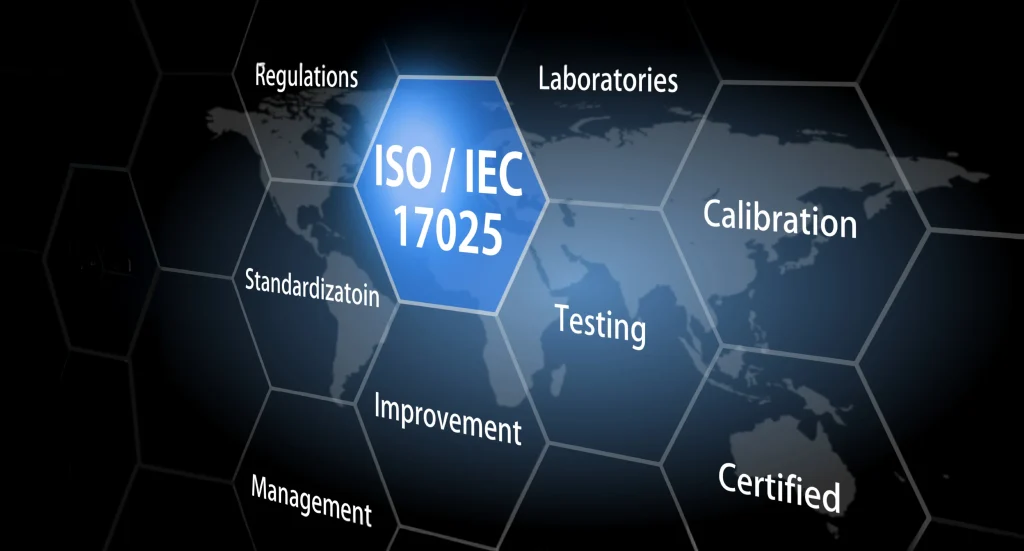
Published in September 2025, the latest revision of ISO/IEC 17025 is the most significant update to laboratory accreditation in nearly a decade. For the first time, the standard includes explicit requirements around digital calibration data, electronic signatures, and the validation of software used in measurement and reporting.
Laboratories must now demonstrate full traceability and control over digital measurement systems — not just the physical instruments on the bench. That is a meaningful shift. With over 114,600 laboratories globally holding ILAC MRA accreditation, this standard is no longer niche. It is the baseline expectation of international industrial commerce.
The ILAC transition deadline is 30 September 2028. That sounds like plenty of time. For specialist metrology and calibration talent, it is not. A lab that cannot demonstrate digital traceability under the 2025 revision is not simply behind schedule — it is carrying a compliance risk that will show up in the audit.
Smart Factories Are Multiplying the Calibration Challenge
The number of sensors requiring calibration in smart manufacturing environments has increased by more than 60% since 2020. Every sensor is a potential point of measurement drift. Every uncorrected drift event is a potential non-conformance — and in regulated industries, that means product escapes, rework, scrap, and notifiable events.
Traditional fixed-interval calibration schedules were built for a different era of manufacturing. They assume measurement stability between service dates and create blind spots that are increasingly untenable in automated, high-throughput environments.
Predictive Calibration Is Already Operational
IoT-enabled instruments can now signal drift before it becomes a problem. AI and machine learning algorithms — trained on usage patterns, environmental conditions, and historical data — can predict calibration need before measurement integrity is compromised. This is already operational in aerospace, pharmaceutical, and high-precision automotive manufacturing.
ISO 9001 Clause 7.1.5 requires organisations to ensure their measurement resources remain fit for purpose. Real-time calibration status monitoring is the practical infrastructure for meeting that requirement in connected environments.
Digital Calibration Certificates Are the New Standard
Paper-based calibration records are being replaced by machine-readable Digital Calibration Certificates (DCCs), integrated into LIMS and enterprise quality platforms. ISO/IEC 17025:2025 explicitly accommodates these formats, aligning with European frameworks including Germany’s PTB and EURAMET’s interoperability programme. This is not a future development — it is a current compliance expectation.
The Skills Gap Is Already Here — Not Coming
Technology solves part of the challenge. People solve the rest — and right now, the people part is harder.
Approximately 25% of the manufacturing workforce is aged 55 or over. In metrology and quality assurance, where expertise is often tacit and built around specific equipment and standards over years, the retirement wave represents a real structural risk. The UK’s High Value Manufacturing Catapult has documented a measurable deficit in metrology knowledge among engineering graduates entering advanced manufacturing.
The role itself has transformed significantly. The metrology professional today is not simply a technician who sends instruments away and files the paperwork. They need to understand uncertainty budgeting, SPC interpretation, LIMS configuration, digital calibration certificate workflows, and the regulatory implications of the standards they operate under.
ISO/IEC 17025:2025 Clause 6.2 addresses personnel competence directly. If you are building your transition plan, your workforce strategy needs to be part of it — not an afterthought when the auditor is already booked in.
Emerging roles — Digital Metrology Specialist, Metrology Automation Engineer, Quality Data Analyst — reflect the convergence of inspection methodology and data science that is now standard in advanced manufacturing. These profiles are scarce. Demand is going one way.
What the Roles Emerging From This Transition Look Like
- Digital Metrology Specialist — combines traditional measurement science with LIMS configuration, DCC workflows, and software validation requirements under ISO/IEC 17025:2025.
- Metrology Automation Engineer — designs and maintains automated measurement systems in smart factory environments; fluent in IoT-connected instrumentation and calibration data pipelines.
- Quality Data Analyst — bridges calibration outputs and quality management systems; SPC-literate, data-fluent, and able to evidence measurement traceability under audit.
- Calibration Lab Manager — now requires personnel competence management aligned to Clause 6.2, digital traceability oversight, and transition project leadership alongside traditional lab management.
What the Organisations Getting This Right Are Doing Differently
They are not hiring in a panic before an audit. They are mapping their measurement capability against their digital transformation roadmap and sourcing talent well before the gap becomes a compliance issue.
They are treating ISO/IEC 17025:2025 transition planning as a strategic project — using the gap analysis process to drive LIMS modernisation, digital traceability investment, and structured workforce planning in parallel.
They are working with specialist recruitment partners who understand both the technical and talent dimensions of the challenge — not just the job description.
How Kensington 360 Supports Calibration and Metrology Teams
We are a specialist recruitment consultancy focused on advanced manufacturing and Industry 4.0. Calibration and metrology is one of our core sectors — we understand the skills landscape, the compliance pressures, and the talent supply challenges in this market.
Whether you are planning ahead of an audit cycle, managing a team transition, or building capability for a digital metrology programme, we can help you find the right people before the gap becomes urgent.
Looking for Calibration and Metrology Talent?
Kensington 360 places specialists across calibration, metrology, and quality engineering. From calibration technicians and lab managers through to senior metrologists and quality data specialists — we know this market.
Sources: This article draws on publicly available information including ISO and ILAC published standards and transition policies, ILAC MRA accreditation data, Deloitte / The Manufacturing Institute workforce research (2022), UK High Value Manufacturing Catapult published findings, Verus Metrology Partners industry reporting (2025), and Stats Market Research calibration services market analysis (2025). Kensington 360 is a specialist recruitment firm and does not claim technical expertise in metrology engineering.